|
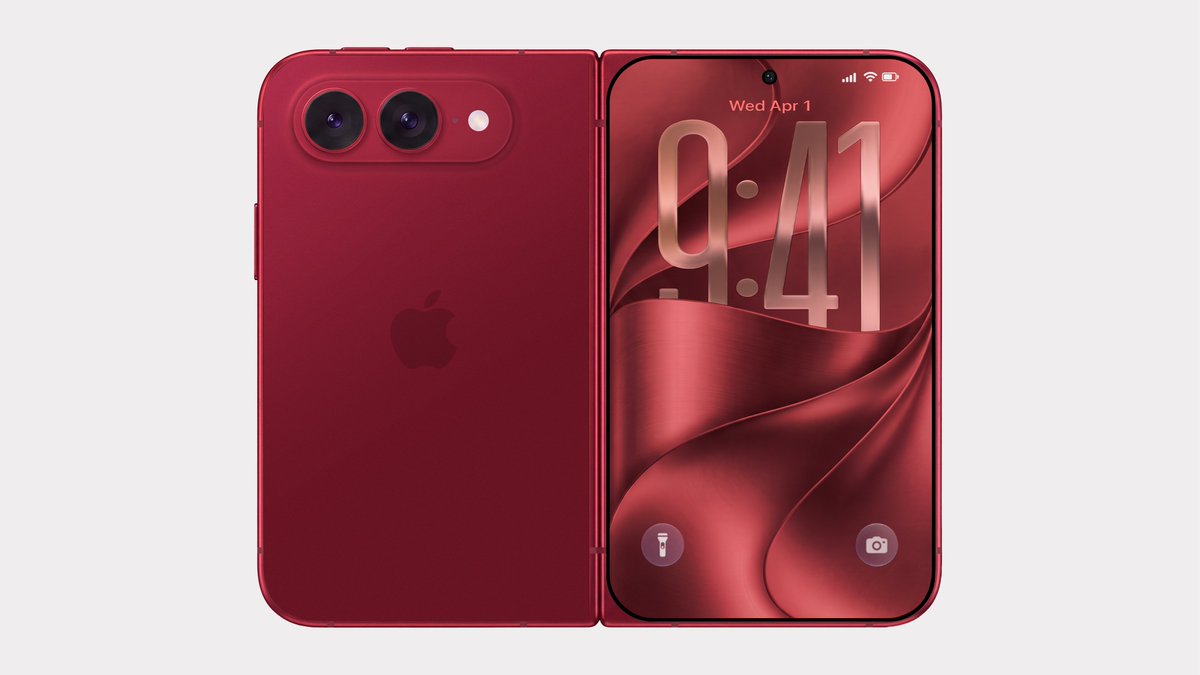
Apple has ordered 22 million OLED panels from Samsung Display for the first foldable iPhone, signaling a significantly larger production target than the display industry had previously anticipated, ET News reports.
|
|
NVIDIA is now allowed to sell its second-best H200 processors to China, rather than just the sanction-approved H20 model that China had previously declined to buy, President Trump wrote on Truth Social. The United States will collect a 25 percent tariff on those sales, the Commerce Department confirmed yesterday.
Trump said that he informed China's President Xi Jinping of the decision and that he "responded positively." The Commerce Department is finalizing details and the administration will take the same approach with AMD, Intel and other US companies. He added that the administration would "protect National Security," so the latest Blackwell and upcoming Rubin chips are not part of the deal. The 25 percent tariff would be higher than the 15 percent the White House suggested in August.
Though the administration won't allow NVIDIA to send its latest high-end chips, it was reportedly concerned that the company would lose business to Huawei if it was completely shut out of China's market, according to Reuters. No details about the number of H200 chips or which companies would be eligible to buy them were released. "Offering H200 to approved commercial customers, vetted by the Department of Commerce, strikes a thoughtful balance that is great for America," NVIDIA said in a statement.
The decision is not without controversy, though. Several Democratic US senators
|
|
The Southern District of Texas announced the seizure of more than $50 million in NVIDIA GPUs bound for China in violation of US export laws. Authorities arrested two businessmen, one of them the owner of a Houston company, accused of smuggling the chips used to train and run AI models.
"Operation Gatekeeper has exposed a sophisticated smuggling network that threatens our Nation's security by funneling cutting-edge AI technology to those who would use it against American interests," said US Attorney Nicholas J. Ganjei. The investigation had been ongoing since at least last year and centers on the illicit export or attempted export of at least $160 million worth of NVIDIA H100 and H200 GPUs. The H200 chips are the very same that the Trump administration announced a revenue-sharing agreement for today, allowing NVIDIA to sell them to "approved customers" in China.
The smuggling operation used a combination of falsified paperwork, purposefully misclassified goods, straw purchasers and even removing the NVIDIA labels on GPUs to ship them to both mainland China and Hong Kong. The conspirators face between 10 and 20 years in prison if convicted.
The H200 chips in question are more powerful than the H20 chip specifically designed to comply with US export restrictions. Production of the H20, however, was reportedly halted shortly after the Trump administration struck a
|
|
We've all been there: You can't (or won't) get help when something breaks, but the YouTube clip doesn't cover your specific issue. It's what repair gurus at iFixit want to solve with FixBot, an AI-enabled app that talks you through whatever repair you're doing. The chatbot will help you diagnose the problem and then walk you step-by-step through the fix. Plus, it's voice-enabled so you won't have to get your phone all smeary when you're elbows-deep in a job. After all, iFixit's guides don't just cover fixing your electronics, but everything you might fancy doing yourself, from appliances through to cars and trucks.
Unlike traditional AIs, FixBot has been trained on iFixit's library of 125,000 guides, its forum and database of repair manuals. The company says there's less risk of hallucination as it pulls from and shows you the schematics it's referencing to ensure you don
|
|
A collaborative report from Consumer Reports, Groundwork Collaborative and More Perfect Union has uncovered pricing experiments within the Instacart app that yielded higher or lower prices for different users on the exact same items from the same store location.
The organizations partnered to enroll 437 shoppers in an experiment across four cities, where each shopper added the same items to their carts within Instacart from the exact same store. Almost 75 percent of grocery items were shown to shoppers at multiple price points, with as many as five different prices shown for the same item. The average difference between the highest and lowest price shown was 13 percent, while the highest delta on an individual item was a whopping 23 percent.
Engadget reached out to Instacart and received the following response. It reads in part: "Just as retailers have long tested prices in their physical stores to better understand consumer preferences, a subset of only 10 retail partners — ones that already apply markups — do the same online via Instacart. These limited, short-term, and randomized tests help retail partners learn what matters most to consumers and how to keep essential items affordable." An Instacart spokesperson added that this is not dynamic pricing (insofar as it is not based on supply and demand), that no personal demographic data is used in the process and that these experiments are random.
The bulk of the tests were conducted at Safeway and Target stores, which both yielded similar results. A Tar
|
|
Congrats to any budding Nostradamus out there who peered into the future to boldly predict that Amazon would bring more shopping features to Alexa sooner rather than later. A gold star for you. Yes, it hasn't taken too long for Amazon to weave more features into the generative AI-powered version of Alexa that are designed to get you to buy more stuff.
Shopping features were part of the original Alexa from the jump, of course, but Amazon is doing some interesting things with the latest iteration. For instance, the company is rolling out a new price tracking feature. Tell it the product you want and how much you're willing to pay for it. As soon as the item goes on sale for below that price, Alexa will automatically order it for you using your default payment method and delivery address. This deal tracking feature also keeps an eye on items in your cart and wishlists. Maybe remember to turn this off when you're going out of town for a while, though.
Another feature that Alexa users can start trying today is a Shopping Essentials tool on Echo Show 15 and 21. You'll be able to see real-time tracking for your orders, your recent orders, household essentials that it may be time to reorder, saved items and your shopping list. Tap the screen and you can find out more info about products, add them to your cart and complete your purchase. You'll soon be able to add a shopping widget to your Echo Show home screen, but for now you can check this out by saying "Open Shopping Essentials" or "Alexa, where's my stuff?"
Elsewhere, Alexa can offer personalized product recommendations after you share details about a special occasion or a person you're buying for. That could be handy if you haven't completed your gift shopping yet. There's also an option to add extra items onto a current order until just before i
|
|