|
 While the MacBook Neo starts at just $599, or an even lower $499 for college students, Apple has insisted that it did not make any design compromises. While the MacBook Neo starts at just $599, or an even lower $499 for college students, Apple has insisted that it did not make any design compromises.
|
|
 If you want a MacBook Neo delivered on launch day next week, you might want to act fast, as the laptop is beginning to sell out for March 11 delivery. If you want a MacBook Neo delivered on launch day next week, you might want to act fast, as the laptop is beginning to sell out for March 11 delivery.
|
RELATED ARTICLES | | |
|
You don't want to be secretly recorded by a wearer of Meta Ray-Bans. We'll explain the distinguishing features of popular smart glasses.
|
|
In a new blog post, Anthropic CEO Dario Amodei has admitted that it received a letter from the Defense Department, officially labeling it a supply chain risk. He said he doesn't "believe this action is legally sound," and that his company sees "no choice" but to challenge it in court. Hours before Amodei published the post, the Pentagon announced that it notified the company that its "products are deemed a supply chain risk, effective immediately."
If you'll recall, the Defense Department (called the Department of War under the current administration) threatened to give the company the designation typically reserved for firms from adversaries like China if it didn't agree to remove its safeguards over mass surveillance and autonomous weapons. President Trump then ordered federal agencies to stop using Anthropic's tech.
Amodei explained that the designation has a narrow scope, because it only exists to protect the government. That is why the general public, and even Defense Department contractors, can still use Anthropic's Claude chatbot and its AI technologies. Microsoft told
|
|
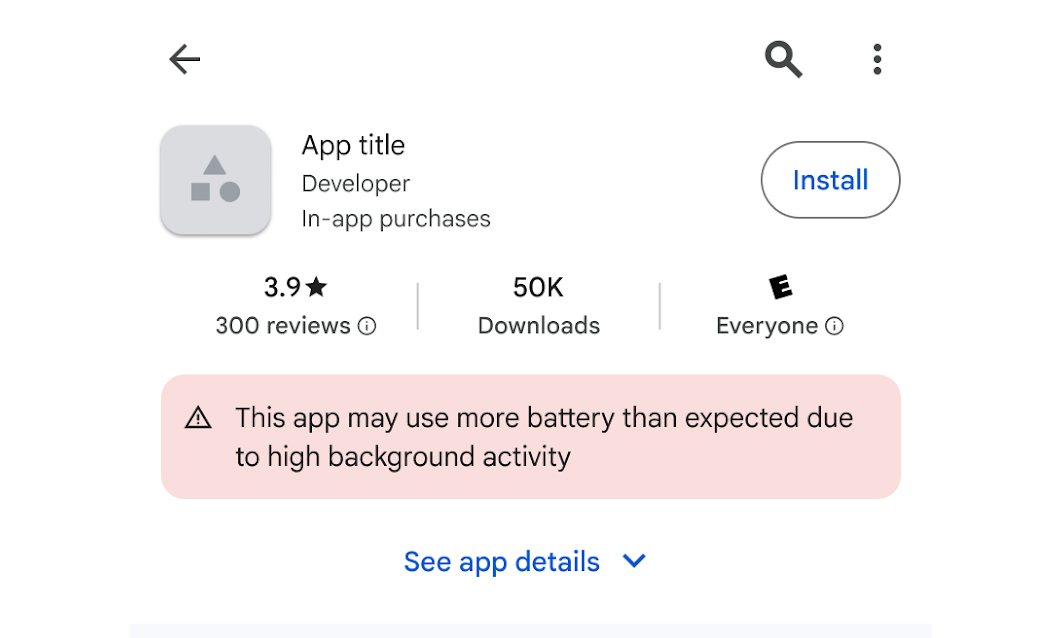 Google is living up to its word and posting warning labels for battery-killing apps. 9to5Google spotted Google's rollout announcement, which the company previously said would arrive on March 1. Google is living up to its word and posting warning labels for battery-killing apps. 9to5Google spotted Google's rollout announcement, which the company previously said would arrive on March 1.
The label says, "This app may use more battery than expected due to high background activity." If you don't yet see the warnings, they may not have reached you yet. Google says the banners will "roll out gradually to impacted apps" in the coming weeks.
Play Store battery warningGoogleWarning labels aren't the only stick in Google's fight against infringing apps. They may also be excluded from discovery services like Play Store recommendations.
Google's definition of battery-draining apps centers around Android's "partial wake lock" mechanism. This service allows an app to keep the phone's processor running even while the screen is off. There are logical exceptions where apps do need this: audio playback, location access, etc. But the company apparently sees too many abusing that API for other reasons. And Google wouldn't want people to assume the problem is with the hardware and switch to an iPhone — because then we're talking about money.
If you're a developer, Google's
|
|
 Apple this week unveiled seven products, including an iPhone 17e, an iPad Air with the M4 chip, updated MacBook Air and MacBook Pro models, a new Studio Display, a higher-end Studio Display XDR, and an all-new MacBook Neo that starts at just $599. Apple this week unveiled seven products, including an iPhone 17e, an iPad Air with the M4 chip, updated MacBook Air and MacBook Pro models, a new Studio Display, a higher-end Studio Display XDR, and an all-new MacBook Neo that starts at just $599.
|
|