|
Making unrealistic New Year's resolutions can be detrimental to your mental health. Here's how to do it right for a calmer 2026 and beyond.
|
|
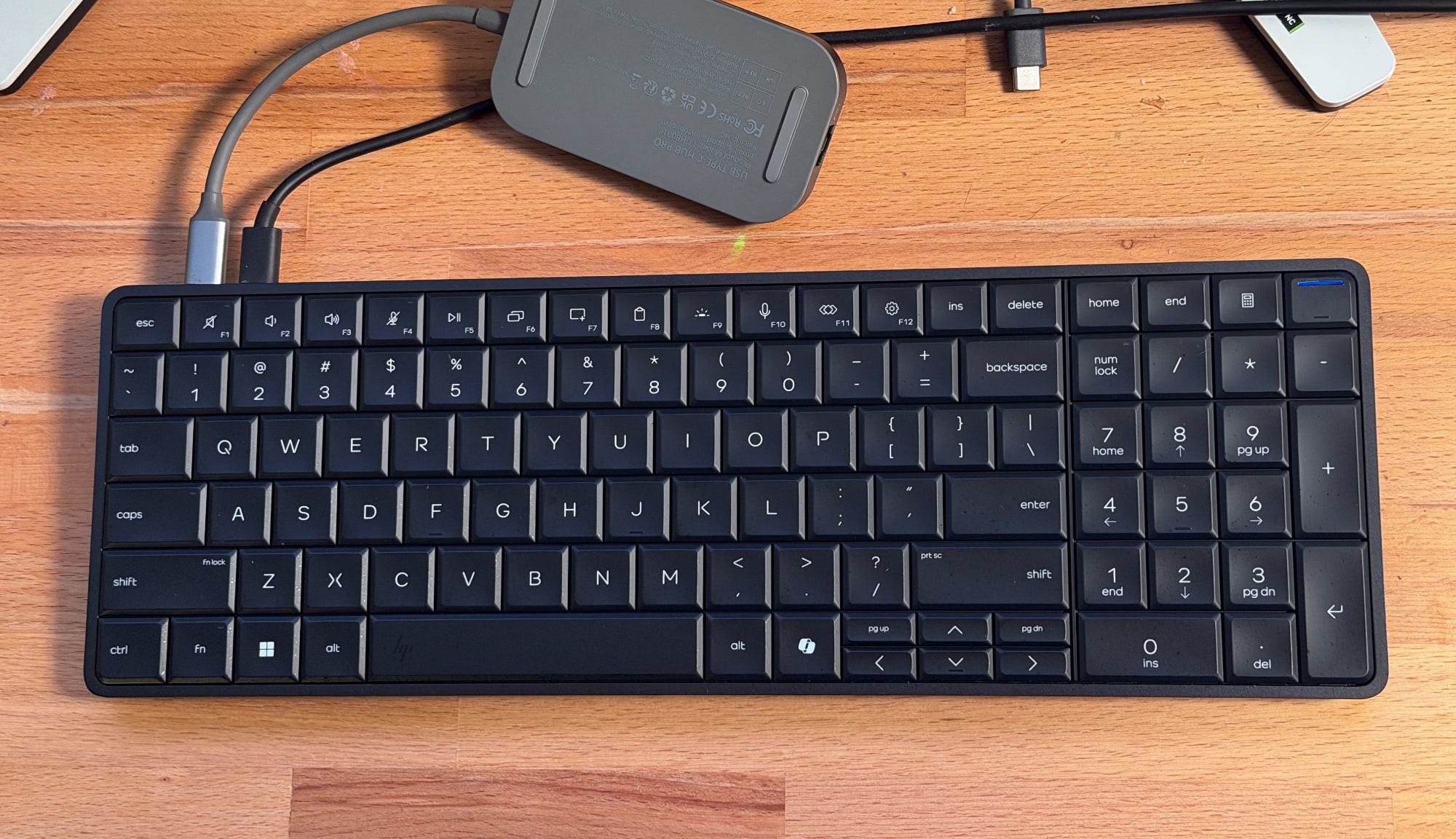 A keyboard computer has always been on my wishlist — that is, a computer where the entire machine was stuffed into a keyboard. Perhaps I caught a glimpse of the Commodore 64 at an impressionable age, but regardless, the idea has always been intriguing to me. At CES 2026, HP is bringing that concept back with the new EliteBoard G1a, which is dubbed a "Next Gen AI PC." A keyboard computer has always been on my wishlist — that is, a computer where the entire machine was stuffed into a keyboard. Perhaps I caught a glimpse of the Commodore 64 at an impressionable age, but regardless, the idea has always been intriguing to me. At CES 2026, HP is bringing that concept back with the new EliteBoard G1a, which is dubbed a "Next Gen AI PC."
It's an IT administrator's dream: It looks a typical desktop keyboard, but it has the full power of a Copilot AI PC inside. You can equip it with Ryzen 5 or 7 CPUs and their embedded Radeon 800 GPUs, up to 64GB of RAM and as much as 2TB of NVMe SSD storage. All you need to do is add a monitor and a mouse, and you've got a full-fledged desktop setup.
HP EliteBoard keyboard PC.Devindra Hardawar for EngadgetThe more I think about it, the more sad I am that the arc of the computing industry trended towards standardized desktops and laptops. There was a brief spark of interest with the UMPC (ultra mobile PC) trend in the 2000's, which Engadget covered extensively as a young blog, as well as ASUS's Eee keyboard. But they couldn't s
|
|
Boston Dynamics' Atlas is finally entering production. After years of testing this humanoid robot (and forcing it to dance), the robotics company announced at CES 2026 that the final version of the machine is being built now. The first companies to receive deployments will be Hyundai, Boston Dynamics' majority shareholder, and Google DeepMind, the firm's new AI partner.
This final enterprise version of Atlas "can perform a wide array of industrial tasks," according to Boston Dynamics, and is specifically designed with consistency and reliability in mind. Atlas can work autonomously, via a teleoperator or with "a tablet steering interface," and the robot is both strong and durable. Boston Dynamics says Atlas has a reach of up to 7.5 feet, the ability to lift 110 pounds and can operate at temperatures ranging from minus 4 to 104 degrees Fahrenheit. "This is the best robot we have ever built," Boston Dynamics CEO Robert Playter said in the Atlas announcement. "Atlas is going to revolutionize the way industry works, and it marks the first step toward a long-term goal we have dreamed about since we were children."
Boston Dynamics has been publicly demoing its work on humanoid robots since at least 2011, when it first debuted Atlas as a DARPA project. Since then, the robot has gone through multiple prototypes and revisions, most notably swit
|
|
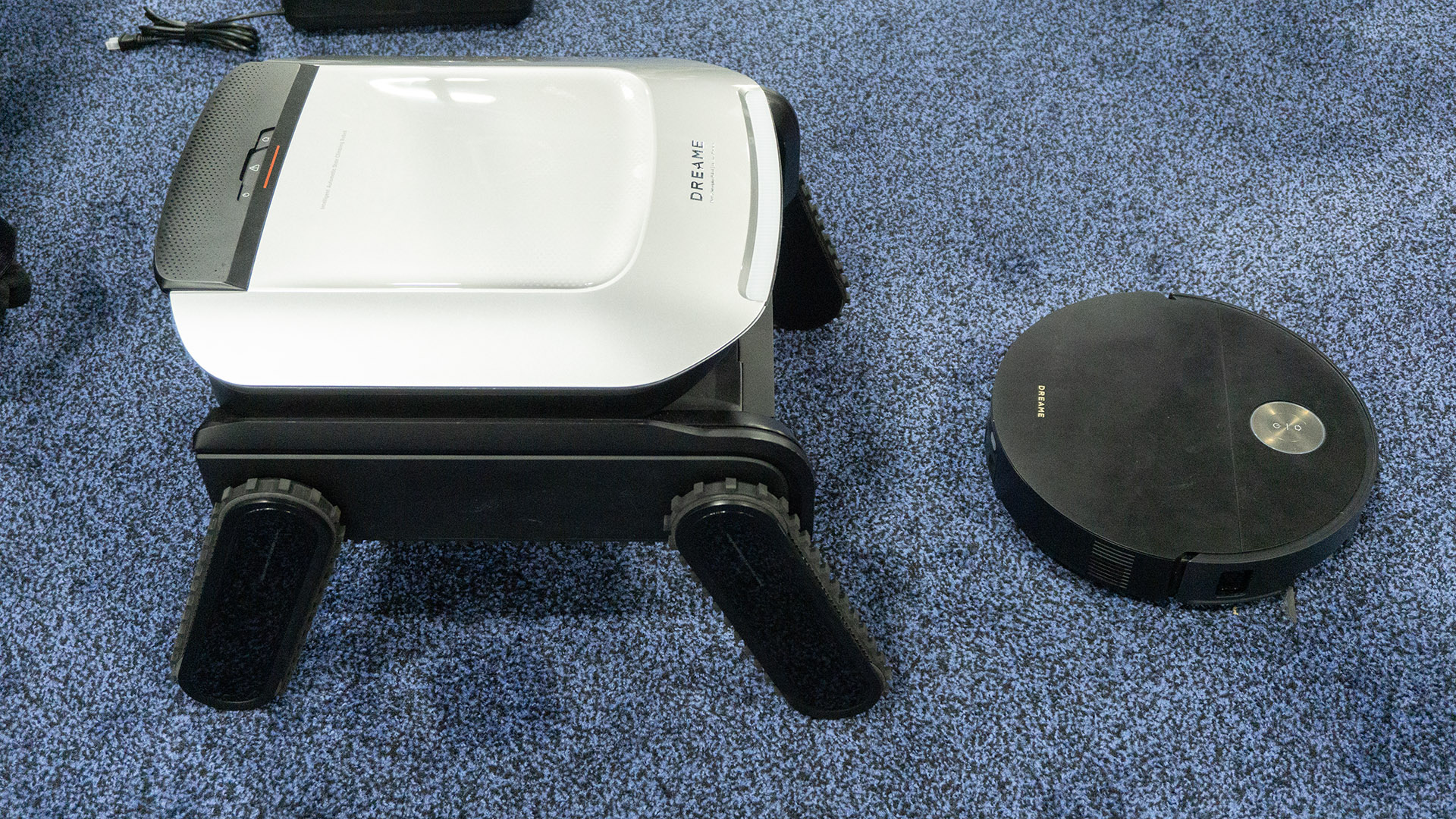 Robot vacuum companies are once again trying to outdo each other at CES 2026. This year, Chinese appliance maker Dreame is showing off a prototype of a device that can climb up and down an entire flight of stairs. Robot vacuum companies are once again trying to outdo each other at CES 2026. This year, Chinese appliance maker Dreame is showing off a prototype of a device that can climb up and down an entire flight of stairs.
The concept, called the Cyber X, was previewed last year at IFA in Berlin. The vacuum sports a somewhat terrifying set of legs with rubber treads that allow it to autonomously navigate multi-story environments. While Dreame has previously shown off vacuums that can move up smaller steps, it says the Cyber X can climb stairs up to 25cm (9.8 inches) high and slopes up to 42 degrees. It can manage both straight and curved staircases, and can climb a flight of steps in 27 seconds, according to the company.
In addition to its legs, the Cyber X also has a built-in water tank to support mopping abilities, and a laser-powered navigation system to help it maneuver up stairs and around other obstacles. It also has a braking system that allows it to stay stable on floors and stairs, even if the battery dies. We haven't been able to see it in action yet, but Dreame is expected to show off its abilities at its CES booth and we'll update this post once we're able to get an up-close look.
Dreame's Cyber X concept and the X60.Karissa Bell for EngadgetFor now, Dreame says Cyber X is just a research prototype and hasn't indicated if it plans to make it, or a robo vac like it, more widely available at some point
|
|
Paid tools that "strip" clothes from photos have been available on the darker corners of the internet for years. Elon Musk's X is now removing barriers to entry—and making the results public.
| |
As the volume of IoT devices connecting to enterprise networks continues to climb, the number of security threats has been increasing in lockstep. Cybersecurity threats, alongside supply chain issues, chip shortages and geopolitical instability, are a major reason that IoT growth has been slower than many analysts had predicted.
Even so, the scale of the IoT security problem is great enough that 52 IoT startups raised a total of $840 million in the latest quarter, and even cautious analysts believe the IoT market will grow steadily in the coming years. In fact, research firm IDC predicts that the IoT market will expand to 55.7 billion connected IoT devices by 2025, with those devices generating 80B zettabytes (ZB) of data.
To read this article in full, please click here
|
|