|
 In addition to huge TVs, compact projectors, Trifolds and more, Samsung announced a new family of laptops at CES called the Galaxy Book 6 series. The company says it's focused on what matters and on what you, hopefully, want in your next laptop. That means Intel's latest chips, a cleaner design and battery life that lasts longer than a day. They're really thin, too. In addition to huge TVs, compact projectors, Trifolds and more, Samsung announced a new family of laptops at CES called the Galaxy Book 6 series. The company says it's focused on what matters and on what you, hopefully, want in your next laptop. That means Intel's latest chips, a cleaner design and battery life that lasts longer than a day. They're really thin, too.
Timed alongside Intel's CES announcements, the whole Galaxy Book 6 series features new Panther Lake chips, optimized by Samsung for three new laptops: The Galaxy Book 6 Ultra, Galaxy Book 6 Pro and Galaxy Book 6.
The 16-inch Galaxy Book 6 Ultra can be equipped with up to Core Ultra X9 processors and promises significant performance improvements, with a new 5th-generation MPU, Intel Arc graphics and NVIDIA's RTX 50 series GPUs (with RTX 5070 and 5060 options). That package leads Samsung to promise up to 1.6x greater CPU power and 1.7x improved graphics performance compared to the last Galaxy Book series. (It's worth noting that Samsung skipped an Ultra configuration of the Galaxy Book 5 series.)
All the laptops feature improved heat-management architecture, with a wider vapor chamber and re-engineered fans. At the same time, the Ultra features a new dual-path fan to cool the GPU even more efficiently and swiftly.
|
|
Here are all the details on the Intel Core Ultra Series 3 that you'll find in practically every laptop this year.
|
|
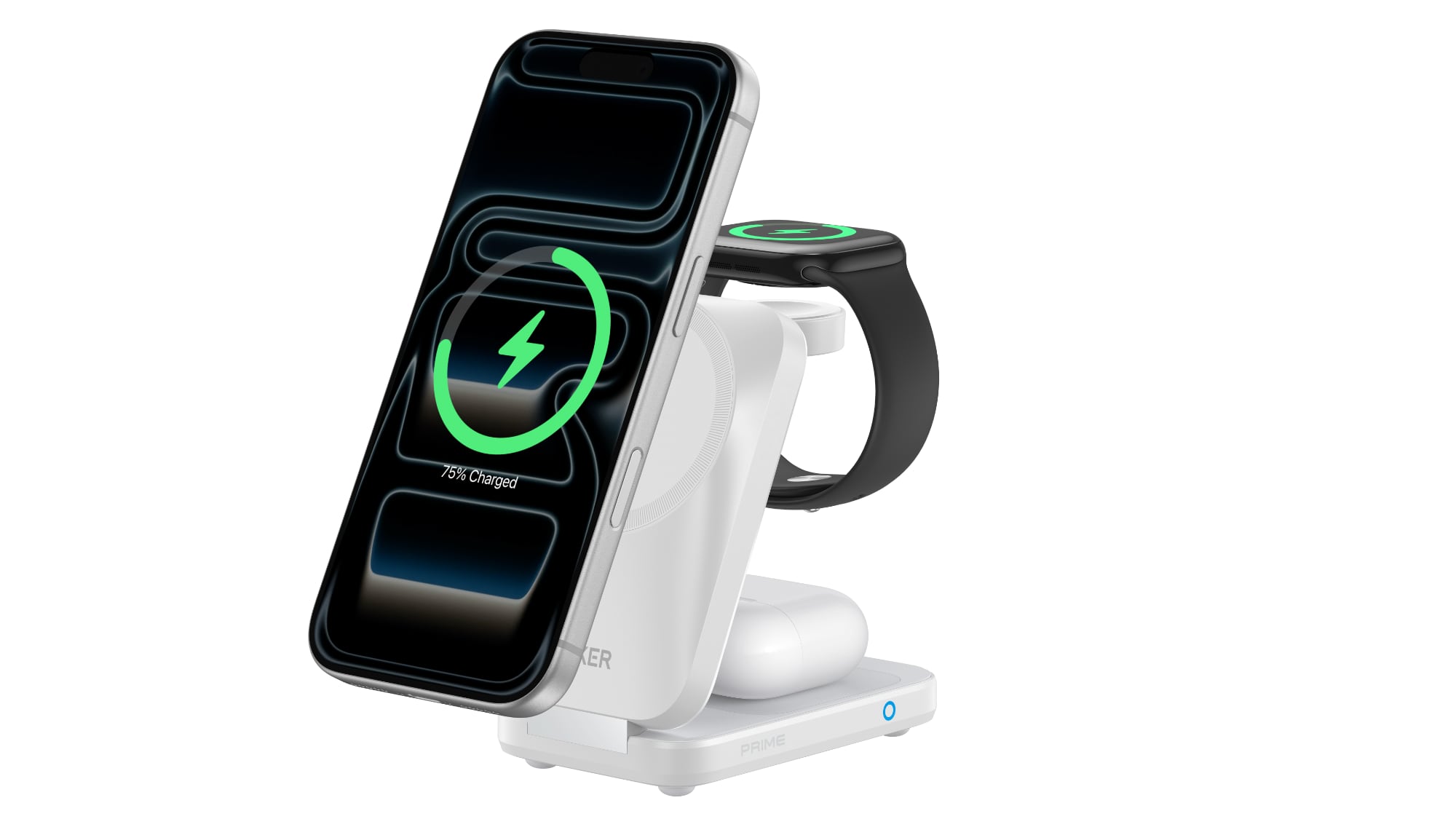 Anker today announced several new charging options that are set to start rolling out to customers in January. There are three products in the Nano family, along with a new Anker multi-device charging station designed for the iPhone and Apple Watch. Anker today announced several new charging options that are set to start rolling out to customers in January. There are three products in the Nano family, along with a new Anker multi-device charging station designed for the iPhone and Apple Watch.
|
|
The following article discusses adult themes.
One surprising find at CES 2026 comes from OhDoki, the Norwegian makers of The Handy, a smart stroking device. It turned up to the desert with two new products, the Handy 2 and the Handy 2 Pro. Fundamentally, they're the same device, but the Handy 2 Pro comes with a far bigger battery, taking the usable life from one hour on the standard model all the way to five. That extra power enables you to run the 2 Pro far faster and harder than the original once you set it into Turbo mode. In fact, I was told the hardware can essentially be "overclocked," although I wouldn't recommend it. Because the motor action was so aggressive that even just holding it in the hand, I'd be worried about breaking bones.
There are plenty of useful new features, including using the Handy's beefy battery to charge your other USB-C devices. In addition, the sleeves are now be mounted to the motor arm with a click on motion, so you don't have to wrestle with the (very) weighty hardware when you don't have to. There are even tripod screws on both the side and bottom of the unit, enabling you to mount the Handy 2 to any compatible equipment. And, if you don't want to use your phone to control the action, there's a dot matrix display on the side which will show you both speed and stroke length.
Naturally, the company's representatives were keen to highlight the connectivity features beyond just connecting to your own phone. As well as allowing other people to control the device, it'll sync with various VR and video content platforms as well as tube sites like Xhamster. And the company has recently teamed
|
|
Smartglasses company Rokid has introduced new display-free AI glasses at CES 2026. Dubbed "Style", the glasses are intended for all-day use and are compatible with users' corrective prescriptions.
Style supports multiple AI engines, including ChatGPT and DeepSeek, instead of being locked to any LLM. The glasses can also work with Google Maps and Microsoft AI translation.
Style is powered by a dual-chip setup, with an NXP RT600 handling low-power, always-on tasks and a Qualcomm AR1 taking on heavier AI and imaging workloads. Rokid claims this architecture helps it reach up to 12 hours of battery life under typical use.
A 12MP camera with a Sony sensor on the front supports 4K capture. Video can be shot in three different aspect ratios, which Rokid says makes it easier for creators to make content for different platforms. Style can record up to 10 minutes of continuous footage, which Rokid is quick to point out exceeds the roughly three-minute limit on Meta Ray-Bans.
The glasses weigh 38.5 grams and sport ultra-thin lenses with anti-scratch coatings. Style is a bit lighter than the Rokid smartglasses that we reviewed earlier this year, which include a display. The company also offers transition lenses in a variety of colors and the frames are offered in two.
Style is available for reservation now with a one dollar deposit and will officially release globally January 19. The AI smart glasses will retail for $300. Glasses purchased for a vision-impaired user will receive a 20 dollar subsidy from Rokid.
This article originally appeared on Engadget at https://www.engadget.com/wearables/rokid-introduces-display-free-ai-smartglasses-at-ces-2026-010017906.html?src=rss
|
|
Intel hits the ground running for 2026.
|
|